My thoughts on #BamaRush and diversity

Over the last few years, #BamaRush has been a phenomenon that has captured so many people’s attention through social media and beyond.  It highlights the University of Alabama sorority recruitment process.  It started with some young ladies highlighting their experiences at UA on TikTok, and others followed.  With it came many parodies also, and generally very positive perceptions.  Long story short, it has added to the appeal of the institution for many prospective students, not to mention individuals who desire to be a part of the sorority recruitment process.

However, I read with great interest an article that brought up a consistent concern for me regarding how many evaluate the process.  Some state that it is a segregated/racist process, and it limits students of color from participating.  That was the argument that I noted as the significant theme of this article that I read earlier this week.  It is one of many that I have read this year and in years past.  In some ways, I have my biases, which I will explain, and I understand the argument.  However, I also have another perspective that challenges this bias.  Please allow me to explain.

In the late 1980s to the early 1990s, I personally had my experience with the University of Alabama white fraternity and sorority system.  As a black student during that time, I witnessed many misguided actions of the white fraternity and sorority system. I was privy to the actions of the member organizations of the Interfraternity Council (IFC) and the Panhellenic Council in intentionally limiting access to membership for black students to these organizations, and I spoke with members of these organizations who were classmates, who very blatantly tried to provide a rationale for not allowing people of color to join their organizations.  I witnessed events like Old South Day, where one organization led an annual tribute to the Confederacy with a focus on dressing in Confederate military uniforms and having their female dates dress in antebellum dresses while on occasion bringing in poor, young black children from the Tuscaloosa community to dress as slave children and participate in the Old South parade.  I recall the “Who Rides the Bus?” swap party (in this case a sorority party with a fraternity) in which the sorority dressed in black faced and placed basketballs under their dresses to emulate poor pregnant black women on welfare.  I was on the football field when Kimberly Ashley, a black student, was crowned as homecoming queen, and the section of the stadium where the IFC and Panhellenic organizations sat embarrassed themselves and the university with their response to the outcomes of the student body vote.  I was a redshirt freshman of the football team, so I was not dressed and remained on the sidelines at the half with other redshirt teammates when the jeers, throwing of objects toward the field, and turning their backs to the field occurred.  These are just a few of the many experiences that I witnessed as an undergraduate student.  For that reason, I had a very cynical view of the system and its legacy.  These experiences were not a part of my undergraduate education that I held dear to my heart for sure.  I perceived the organizations under the umbrella of IFC and Panhellenic to be racist and unaccepting of black people and other people of color.  That was so ingrained in my mindset that when I arrived at the University of Oklahoma in 2000, and I witnessed a young black man wearing a t-shirt with the letters of an IFC organization, I was confused and concerned for his safety because that was just not something that I had witnessed in Alabama.  Obviously, there was a much bigger world outside of Alabama, and somehow others had figured it out already. 

Through the years, I continued to hear of such negative situations related to the white fraternity and sorority system after my matriculation and work at UA to include the continued failed efforts of the university to try to integrate the system in the early 2000s.  However, as I returned in 2020 as the Vice President of Student Affairs (VPSA) with responsibility for supervising the overall fraternity and sorority community – the Office of Fraternity and Sorority Life (OFSL), I set aside my views based upon my past experiences.  It was my hope to start anew in terms of my work, and I had met with some students and alumni of these organizations prior to and during my interview who were trying hard to change the perceptions of many who had had experiences like me.  I witnessed some significant efforts by the white fraternity and sorority community to move past the disturbing past that had been painted by alums of their organizations.  For that reason and due to my personal experience, I want to share a different perspective regarding these organizations. 

The article that I mentioned earlier that prompted my thoughts on this matter made some very negative comments about the lack of diversity in the white fraternity and sorority system after this year’s “#BamaRush”.  (Note:  #BamaRush is about sorority recruitment, but the author carried the theme across white fraternities and sororities at Alabama.).  The article noted that the faces of those involved in the process continued to be predominantly white, and with that, the article insinuated that the system continued to perpetuate a racist mindset.  The author had an agenda, and the author did not hesitate to continue to say that nothing had changed, and that the institution (UA and the OFSL) had not done anything to change the “appearance” of racism through the years.  Having only been a few months removed from this experience, I found the article greatly distorted and lacking in truth about what really happens in the process.  It diminishes the hard work that the university continues to engage in through the leadership of those in OFSL (to include advisors of these organizations who I worked with in the past) to make a change in this area.  However, there are many realities that exist that make this a difficult challenge for the institution and for the organizations.

As the VPSA, I spoke to many young ladies who were students of color who participated in white sororities at Alabama.  They talked about their experiences in generally very positive terms.  They were engaged.  They were serving in leadership roles.  They were accepted as members of these organizations.  Were there some snafus here and there based upon some individual member of their organization or other white organizations that were racist/problematic?  Yes.  We still have those folks in society unfortunately. That does not realistically define the culture and ethos of the entire organization.  However, in hearing the good and the bad and due to my natural curiosity, I engaged in my unscientific research study to better understand the culture and understand the state of things at the university.  I endeavored to figure out ways to make the process better, and I wanted to hear the voices of all involved, to include of course students of color who experienced the process firsthand.    What I discovered was that those who I spoke to enjoyed/loved their experience and didn’t regret it.

I am not saying that racism does not still exist in these organizations.  I supervised the adjudication of student misconduct issues by students who were members of those organizations that were deeply racist.  However, the actions of individuals do not illustrate the character of the entire organization because I spoke with members and advisors of these organizations who very quickly tried to do the right thing and deal with those members, not for public relations reasons, but because they knew that it was wrong.  They used the moments as teachable moments for their organizations.  They advocated for education across the system.  They sincerely wanted to do the right thing.  Many of these conversations preceded me, and I personally was engaged with many of them during the tumultuous George Floyd period where some students made some very derogatory statements.

Shifting gears, a primary challenge of the system in recruiting more students of color is the long and disturbing legacy of the organizations at the institution.  There are many who attended the institution like me who experienced these negative episodes.  There are even more who have heard about them.  George Wallace continues to stand in the schoolhouse door for many black people, and even though they will allow their student to attend the institution, they will not allow them to be exposed to a system that they feel is racist.  Participating in sorority recruitment is expensive, and students need financial support from their parents to make it a reality.  If parents are concerned about their student’s wellbeing because of their perceptions and knowledge of the negative aspects of the system’s past, they are not going to support it.  That leaves any level of recruitment to be a futile process for white fraternities and sororities in attracting students of color.

Another reality is that for many middle-class black people, we desire for our children to receive the best education possible, and that means that we move to the suburbs to achieve that goal.  It’s unfortunate, but true.  However, in making that decision, these black families realize that these schools are sometimes not the most diverse.  I recall classes, activities, and events where my children were the only students of color present.  It became our reality.  However, without fail, my children had positive experiences for the most part.  What point am I making here?  It’s two-fold.  First, these students connect with their white peers because those are their classmates.  These are the people that they have grown up with.  They don’t discuss the color of their skin or cultural differences often.  They are just friends.  Consequently, the likelihood of students of color having an interest in joining a white fraternity or sorority are much more likely.  It’s not a guarantee, but it is a high likelihood.  They are going to want to go to college where their friends are going and be affiliated with organizations where they find a fit regardless of the racial makeup.  It is not surprising to find that many of the students who were members of Panhellenic organizations that I spoke to were black students who went to predominantly white suburban schools.  Many white sororities who are committed to doing the right thing realize this, and they actively recruit these students of color from these schools, not only through cold call recruitment, but many of these ladies have friends from high school who are students of color who they recruit.  It is a very organic process, but also very deliberate for some organizations. 

Here is the challenge for these organizations in recruiting students of color particularly black students.  Many of these affluent parents are members of historically black, National Panhellenic Council (NPHC) organizations.  The student may feel compelled to join one of these organizations as a legacy.  Yes, the process is different in terms of recruitment/intake, and they don’t align in terms of timing because NPHC organizations require that students complete one or more semesters before applying for membership, amongst other requirements.  Despite these, many students have been encouraged by their parents to join NPHC organizations versus going the IFC and Panhellenic Association organizations.  No matter how much these organizations attempt to diversify, it is difficult to compete with the legacy reality of some students of color who desire to align more with their parents’ (and other family members and friends) organizations.  I have only seen a couple of articles written in the media that focus on this reality of the challenge of recruiting for white fraternities and sororities in the recruitment process.

My daughter chose to attend Alabama, and members of several white sororities who followed me on social media and saw how engaged she was in high school and in the Edmond, OK community, started reaching out to her directly and recruiting her.  There were several current UA students who were from UA who went above and beyond to meet my daughter during the times that she was visiting here in Alabama, or when they were home for the holidays visiting their families in Oklahoma.  They worked hard to recruit her, but as she is a legacy of a NPHC sorority, she was inclined to consider that more, even though she has not fully committed to doing that even.  Regardless, this demonstrates the organizations’ recruitment efforts firsthand, and it demonstrates the challenges that they face in terms of legacies.

Additionally, for some students of color, IFC and Panhellenic organizations are just not a fit for them culturally.  All students, regardless of their background, will gravitate toward people who have similar interests, cultural backgrounds, and other characteristics.  It is human nature for people to want to be with people that they know and have similar interests, beliefs, and in some cases skin color.  You face an uphill battle as white fraternities and sororities in trying to recruit when cultural barriers are a reality in potential new member (PNM) decision making.

I remember being asked by the president and people at the system office about the diversity numbers.  They were always nervous this time of the year because they knew that the media would be seeking the numbers to “create a narrative” about the white fraternity and sorority organizations not being diverse, which I understood the concern, but… Yes, the fact of the matter is that the numbers are low, and through the sorority recruitment process, the numbers have increased through the years, but they are still low.  During my time there in the VPSA role, I looked at the number of students of color who started the process and ultimately received bids during my brief time at the university, and consistently, there was not a significance difference than white PNM versus students of color PNM.  I was frustrated that the university never shared this kind of information because it missed an opportunity to demonstrate the overall efforts to share the full-hearted efforts of not only the university, but the organizations to welcome students of color to participate in the recruitment process.  These efforts are a huge departure from the “blocking” of students of color efforts that took place in years past at the institution. 

I believe that the narrative of division, racism, and elitism is one that sells, so it is what some authors return to as they continue the same story about the fraternity and sorority system at UA.  The system is not perfect by any means, and I don’t know every aspect of the system. However, I know people, and I know research.  I have done my share, and there have been improvements through the years.  It is important to continue this progress, but it does not happen by continuing to brow beat those who are trying to do the right thing.  After a while, they get tired and just say it is what it is.  They will eventually throw up their hands and embrace the mindset that they can’t win in their efforts to do what is right.  I believe that throughout our society many are trying to do the right thing in correcting past wrongs, but we can’t punish them for the past when they are trying to be a part of the change.  We must band together to remove the wrongs in society.  We can accomplish more together.

Never underestimate the goodness of people

Sometimes, you experience situations with people who seem to only be interested in themselves, and not in helping others. However, on occasion, you find people who want to do all they can to help others.

That became glaringly true for my family and I recently. We had the good fortune of having our oldest son/sibling graduate from college. It was a once in a lifetime experience that we looked forward to attending. The event was on a Friday morning at 10 am. As our youngest was nearing finals in middle school, we did not want to take him out of school too early on Thursday, so we waited until after school to leave to drive to Monticello, AR. It is just under a five hour drive, so we felt that we could be there before 8:00. That would have given us more than enough rest for the celebratory event the next morning. 

We left, and as usual, Shanna and I were enjoying podcasts (Check out our favorite when you have a chance: Stuff You Should Know…shameless plug haha) when we approached Indianola, MS. That’s when our car began to sputter and smoke. I am fairly familiar with cars, and I had never seen anything like it. Needless to say we made it to a Love’s Travel Store (another one of our favorites) when it all but shut down. I called roadside assistance, and due to the model of our car, the nearest dealership was approximately 100 miles away. Considering we would need to be at graduation on time, my top priory was getting it towed and finding a rental car. Easy enough right?!?!  Well, not at 8:00 at night in Indianola…the Mississippi Delta. 

After many calls, we found a tow truck that would take the car to Jackson, and this is where the goodness of people comes into place. Derek Byars who owns Endless Towing, went above and beyond to take care of us. As everything was closed, and the car rental location would not open until 8:00 the next morning, we were not going to make it to Monticello that night. Derek put the car on the tow truck, recommended a hotel in Greenville, which was where he drove from (about 35 miles), and took us to the hotel because there are no Uber/Lyfts in that part of the world. Taxis were nonexistent also. We would have been stuck if it had not been for him. I must say that his truck was very nice and very comfortable for a tow truck. Hehe

Once we got to the hotel and got settled around 11:00, we tried to get rest so that we could get to the graduation in time. The next morning I was downstairs and looking for a ride to the rental car location. Again, no taxis or other mode of transportation, and the rental car location was not answering the phones before opening. I had seen a gentleman and his wife at breakfast earlier, and after greeting each on a couple of visits to the buffet, I prayed about it, and I blindly asked for a ride after explaining the situation. He was there for his wife’s mother’s funeral, sadly enough, but they were very courteous. They got me there. Once there, the location representatives informed me that they had overbooked on cars (mad). Who does that?!?!!  After standing in line to get that news, it was 25 after the hour. The only other place in town that rented cars was the local Toyota dealership. I called, and the receptionist informed me that the two individuals who were responsible for doing rental paperwork were out. I hung up after this disappointing news, but after a little prayer, I decided to call back and tell them story of what was going on with my son’s graduation which was in less than an hour and a half, and it was an hour and ten-minute drive to his campus. The young lady reminded me that they couldn’t help because their representatives were out. I explained that I understood, and I made my way back to the car of the guy who I met at the hotel who had graciously insisted on waiting until I got a car. I had no idea what to do, and at that moment a phone call came from the dealership. The young lady had contacted the owner of Oakes Toyota in Greenville, Bryan Oakes, who had driven to the dealership to figure out a way to help me. Mr. Oakes did not hesitate, and he called one of his other employees in and had him collect my information. It was the most informal rental agreement I have ever signed.  Regardless, he made it happen. Unfortunately, it was now 9:15, and I still needed to go back to the hotel to pick up Shanna and Isaiah and all of our things. I did that and drove to Monticello in record time. We made it right after the graduates walked in and the National Anthem was sung. We made it, and we had a chance to watch Michael receive his bachelor’s degree. 

Throughout our version of “Planes, Trains, and Automobiles”, we met some folks who found ways not to help us. My faith was reaffirmed in people through the acts of those men who helped us to make it graduation in time. It reminded me of something that I have always tried to do which was be aware of opportunities to help others. We can find a million ways to say no. That’s the easy way out. Find a way to yes, and think of it as merely helping your fellow human being. You never know what bigger impact you will have on that individual’s life.  God bless.

Flee from the Fellowship of the Miserable

During my freshmen year of college, I was a part of the football team at the University of Alabama. The head coach was Bill Curry. I learned much from Coach Curry that year. He left at the end of the season, but my brief time with him taught me much about life. I am appreciative to this day for God allowing him to be a part of my life.

As we would prepare for practice each day during that season of 1989, we would have to come into meetings prepared and on time. He required that we have two legal pads with us. One was for football, and the other one, he stated was for life. The latter one is the one that impacted my life so much. It was the one where he required us to write down our goals and to develop roadmaps for achieving them. It was the one where we made notes regarding life lessons that he had learned through the years. It was the one where we learned lessons that would make us into productive, God-fearing, young men — not perfect, as he knew that we would make mistakes, but he tried to help us to minimize them. Yes, I learned much as a freshman football player (and throughout my entire collegiate experience), but his talks about what it took to become a man and to live life after football was very life changing. 

He spoke to the young players quite often about the adjustment to college life. He stated that for some, the lack of playing time and engagement in game day planning was going to be tough for us that fall. He stated that it was important to learn a life lesson through this period of drought and disappointment. He indicated that he knew that there would be frustrations with not being able to play after having stellar high school careers. The natural instinct would be for us to come together and complain about it. It would be easy to come together and complain about the coaches and their lack of awareness of our talent. It would be easy to say that there were “favorites” who got playing time over those of us who were more talented. It would be easy to get together and just complain. He encouraged us to resist the urge to join the ministry of the “Fellowship of the Miserable”. The Fellowship of the Miserable loosely describes the propensity of individuals to congregate and complain based upon common concerns and issues that they are mutually experiencing. These complaints are not dealt with in a positive manner. They are usually situations where the frustration and anger are counterproductive, and it is an environment where blame is assigned to others rather than engaging in self-reflection on how and why you arrived at your current situation. In many ways, it is human nature, but Coach Curry encouraged us to take a higher road. He encouraged us to find strength in one another and to resist the urge to play the blame game. He encouraged us to look inside ourselves, hear what was being said by the coaches about improving ourselves, and develop strategies to move in that direction. It was too easy just to fall into the Fellowship of Miserable. If you embraced that rhetoric, you would not be able to hear what was being said to benefit you in your improvement. You would not be able to move toward improvement.

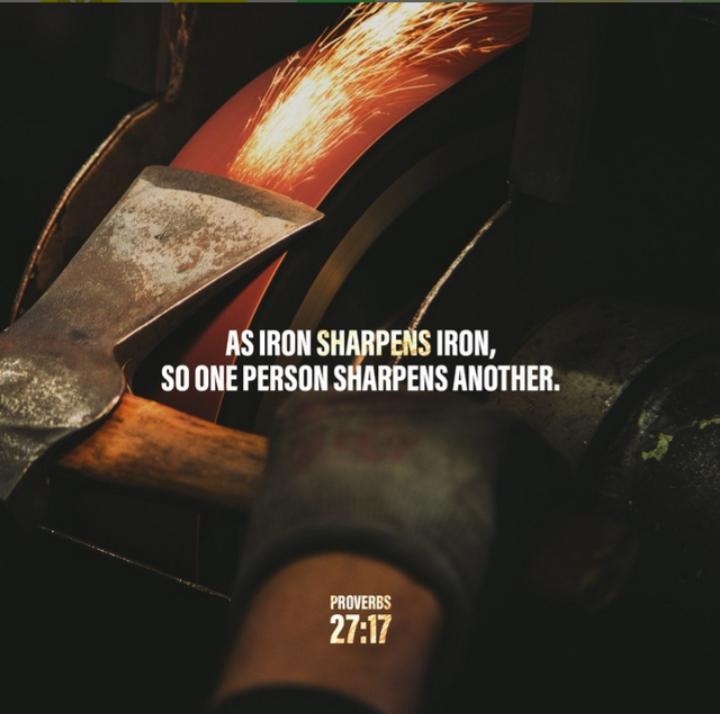
Proverbs 27:17 tells us to sharpen each other: “As iron sharpens iron, so one person sharpens another.” In Coach Curry’s mind, I am sure that this verse holds true. I cannot recall him using this verse, but it contains the same messaging that he highlights. In aligning ourselves with people who we consider to be close friends, be careful who you select. As a piece of iron works to sharpen a knife and make it more effective in its role (cutting), it is important for us to find people who are going to sharpen us and make us better people…sharper in our lives. We want to find people who are going to help us achieve our best version of ourselves. The Fellowship of the Miserable does not allow that to happen. It is counterproductive to you getting better. You are aligning yourself with people who are only interested in stating the obvious in the situation. They are only interested in blaming others for the situation. These situations do nothing to sharpen the knife. They make the knife more dull.

Please note that there are legitimate times when it is appropriate to complain about issues. There are times when people are treating you and others that you are aligned with unfairly. Please address those accordingly. This is not what this is about. It is about realizing that you do have a locus of control. If you don’t, and you need strength through numbers to make a change, do it. This is about people not taking responsibility for circumstances that they are in in which they have the control to overcome. I hope that that makes sense.

To this day, I continue to think about this lesson from Coach Curry. I try to not to engage with people who embrace negativity. I try not to engage with people who resort to the blame game. Yes, I strive to support, encourage, and embrace all, but if they continue to be content with being a part of the Fellowship of the Miserable, I try to separate myself from them because I don’t want to resort to that thinking and behavior. Is that to say that I am better than those who are part of the “Fellowship of the Miserable”? Does that mean that I have not been a “woe is me” kind of person at some point in my life? Does this mean that I don’t have bad days when I just grope along in my misery and grief? I respond with an emphatic “No” to all of these. There are days when things are tough, but it is important to remember not to get stuck there. It is important to figure out a way out of your rut. For every negative thing that has happened in your life, there are hundreds of positive things that are off-setting to the negatives. Remembering that complaining and griping about it is not going to change anything is the key. Spending time with people who are only going to pull you deeper into this negativity is not worthwhile. Figure out a game plan to make things better. It might not be immediate, but there are options. Don’t allow the Fellowship of the Miserable tell you any differently. 

No Excuses…Lessons Learned from a Missed Workout

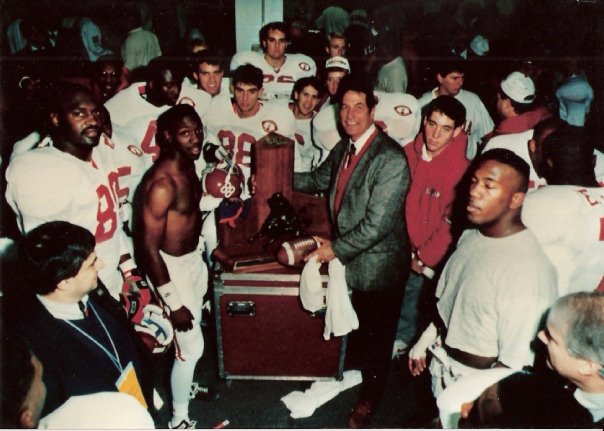
Picture from the locker room after the 1992 SEC Championship Game Courtesy of Ken Gidley, University of Alabama Athletics (Myron L. Pope, Former Vice President of Student Life, University of Alabama)

This morning, I recalled a situation that I experienced many years ago during my playing days at the University of Alabama. The memory stemmed from very valuable lessons that I learned about so many things to include responsibility, accountability, and verifiability.

Coach Gene Stallings was the coach during my last three years at UA, and I had a healthy amount of fear of him. That fear was not so much a fear because he was going to kill me, but that was possible. The fear was more so respect and reverence. Growing up in Marengo County, Alabama, we were taught to respect our elders and not question (be disrespectful of) authority. I spoke only when spoken to because that level of respect was what I was taught. It was who I was.

Along those same lines, I followed orders, and I made sure that I followed the rules that those in authority set. I didn’t want to be disrespectful, and I didn’t want to break any rules. I was not hard core perfect by any means, but I respected Coach Stallings and the rest of the coaching staff.

Around this time of the year, just before spring practice, we would engage in these “special morning” workouts. We would get dressed and be on the field a little before 6 am. We performed these exercises in the 80-yard indoor football facility. I note this because at that time, the facility was only big enough to accommodate an 80-yard field. I was pleasantly surprised to see that it had expanded to a full football field recently. Anyway, we would line up and start stretching with our guts in knots because we didn’t know what gruesome form of torture the coaches had in store for us each morning. One thing was certain was that the training staff was available in case anyone needed medical attention, and the huge 55-gallon trash cans were strategically around the indoor facility. I must highlight here that these were not available because we were trying to do our part to keep our beautifully pristine campus clean. They were available for unexpected revisits with your past night’s dinner. The workout experience was a grueling one with each of the position coaches being stationed at various corners of the facility to take you through a set of agilities before sending you to the next station. After stretching, we would move by position (Tight Ends, Linebackers, Offensive linemen, etc.) to each station with the coaches. We would run through cones/shuttle runs, do burpees, pushups, and other circuit workouts for about five minutes before moving on to the next station — typically about eight overall. It made for a very unwelcomed wakeup call on those mornings. We did these for a couple of weeks as part of the off-season conditioning program, but it was so much more than that. It built endurance, but it built trust. It caused us to focus on our teammates and to encourage one another. It made us not want to quit. As an alum of the infamous Bear Bryant Junction Boys’ experience, Coach Stallings understood the value of such early morning experiences. It was what made us so successful not only during the season, but through life. Even today, I remind myself that if I survived that experience, then I can survive anything. It goes without saying that no one missed these workouts because he valued this so much in our overall football programmatic efforts.

Well, one morning, I missed. As I mentioned, I revered Coach Stallings, and the last thing that I wanted to do was to let him or my teammates down. However, on that morning, my alarm clock did not go off. I was meticulous about setting my alarm clock far in advance of when I was supposed to get up because of my fear of missing the workouts. My roommate at the time was a former football player, and one of my fraternity brothers, Dan Webster. Dan had decided to give up football to go into body building, and he worked quite often at the local bars as a bouncer as he was quite the physical specimen. He was the nicest guy ever, but as you looked at his 20-inch biceps, you questioned whether you wanted to challenge him, even after a few too many drinks. Anyway, on the night in question, Dan came in after a long night of work at the bar and reset the alarm unbeknownst to me. It was a complete accident that almost changed my life in a most negative way.

That morning, I woke up at about 7:15. That was about the time that the team was leaving the field to the showers before heading to classes. I sprung out of the bed and double checked my watch, and I realized that the sun was out. They were all dire indications to me that I had missed the workout. I was mortified. I could have died right there because everything that I had worked for was gone because there was absolutely no excuse for missing those workouts. I sat on the side of my bed and literally cried. I finally got myself together, showered, and made it a point to get to the athletic facility to be in Coach Stallings’ office as soon as possible.

I think that this was worse than Judgement Day. I would have preferred to meet my Maker than have to have this conversation with Coach Stallings about my absence from that workout. Coach Stallings’ assistant, Linda Knowles, was such a motherly figure who was well suited for her job. She was a balance for sure with the gruff and very serious former Junction Boy who served as her boss. I ran in and immediately started telling my story to her, and even though she was patient and listened to my story, she knew that this babbling fool in front of her was in big trouble. She did her best to comfort me and offer me support while waiting for Coach. She was always so nice.

She got me in immediately, and I walked in and greeted Coach Stallings. Even though he was courteous, he had a scowl, which was not unusual for the gruff Texan. I sat down in a chair in front of his desk, and I felt like he was sitting on a throne, and I was sitting in the lowest valley which didn’t help my thinking about my situation. I don’t think I engaged in any pleasantries as I immediately went into apology mode. I was in hyperdrive as I tried to tell my story, but I noticed that the scowl did not let up. I may have shed some tears during the confession. I was asking for so much forgiveness that I may have confessed to the Kennedy assassination, the kidnapping of the Lindbergh baby, and whatever else came to mind. I just knew that I was DEAD!!!

He was very patient during my confessional, and after I finally told myself deep down inside to shut up, he just sat there. In what seemed like an eternity, as I could have sworn that the sun set and came back up several times before he finally asked, “Is that really what happened, son?” I started to say the dumbest things like, “I swear on my great grandmother’s grave.” and “If I am lying, I hope to lose an eye.” or something else that was said in complete anxiousness, nervousness, and stupidity. Whatever it was, as I look back on it now, I realize that I was not helping my situation by continuing to talk. When I finally stopped talking, he paused again for another week or two, as I felt like the chair sank lower and lower, and I just knew in my heart that he felt like I was lying and that I was doomed. Finally, he said, “You go down and see LeBaron and don’t ever let this happen again.” Coach LeBaron Caruthers was our strength and conditioning coach, and he was the one who ran the early morning torture…I mean workout sessions. I may have jumped out of the valley of despair that I sat in and probably considered hugging him, but common sense returned to me, and I just shook his hand and promised even more profusely that I was sorry and that it would never, ever, ever, ever happen again. I think he felt sorry for me, and himself, for having to put up with me. It was the greatest amount of grace that I had been granted in my life to that point, and I thanked God that it was not worse.

I went to see Coach Caruthers. I had to do some extra running, and if you know me, I hate running. However, I would have run all day and every day for the rest of my collegiate career just to make up for that situation. Coach Caruthers probably has never had a player smile so much during timed 400 meter, 70 second timed runs. I survived and lived to tell the story.

I learned much about accountability from my time in athletics. This story just added to the life skills learned through sports. The little lesson I learned was the importance of being accountable and communicating with Dan about making sure that we were on the same page in terms of the alarm clock, but it also made me realize that I needed to be accountable and go out and purchase my own alarm clock. I have carried that sense of accountability with me through the years, and even when I have not gotten things right, I have held myself accountable for my actions. It is the right thing to do. I learned early on that a man has to be accountable for his actions right or wrong, and when they are wrong, make amends immediately.

Also, it taught me verifiability. I remember the quote that Ronald Reagan made many years ago that I am paraphrasing, but “Trust, but verify.” I should have verified that situation with Dan because I knew our schedules had changed with his new job. Talking through these types of situations and expecting the unexpected is important. Never assume anything. This type of thinking ahead allows you to “see around the corner” so to speak. It allows you to not only to verify situations, but it also allows you to determine those things that you didn’t see coming.

Athletics taught me much, and certainly, I learned much from Coach Stallings. I admire his leadership, and I am honored to have been a part of his teams for three seasons. The life lessons continue to be of value to me and to my family and others that I engage with on this life’s journey. I am just glad that I lived through that morning to share with you.

You shouldn’t hate me, Coach Stoops:  A lesson in first impressions

In September 2000, I had the amazing opportunity to start a tenure track faculty position at the University of Oklahoma. It was an excellent opportunity, and I was so excited by it. I was pleased with the support and guidance that I received upon my arrival on campus. I created many friendships there with colleagues and students that endure to this day.  However, on one particular day as I was walking across campus, I didn’t gain a friendship of the most recognized member of the Sooner Family at that time — Coach Bob Stoops. 

A great colleague and friend had asked me to serve on the athletic academic appeals’ committee. The committee was a safeguard to ensure that coaches didn’t terminate student athlete scholarships unjustly. It was rare, and I never saw it happen at OU, but all institutions  should have them just in case. Anyway, there was a football player who had been released, and we were to hear his case that day. This was probably late summer 2002, and OU was scheduled to play Alabama in a home and home series that fall and in the fall of 2003. The Sooners won the national championship in 2000, and Coach Stoops would lead them to many successful seasons in years to come. For that, he was, and still is, one of the most recognized people not only in Oklahoma, but across the country. 

The 2002 season was looking really good for the team, as they were a strong contender with a solid returning roster, with the exception of this one particular athlete who had not done what he was supposed to do. He had the right to appeal, but it was clear what had occurred was the right decision. 

As I was walking across campus to the meeting on that summer afternoon in Norman (which by the way is one of the most beautiful campuses in the country), I saw this gentlemen merging with me on the myriad of sidewalks converging from across various corners of the campus. I immediately recognized him. He smiled and greeted me. Immediately he thrust out his hand, and said, “Hello. I’m Coach Bob Stoops.”  In my head, I was like, “No s***!  Everyone knows who you are!”  (Haha). I thought it was a pretty cool encounter as I didn’t expect him to be at the meeting, but possibly a position coach or athletics academics team member. Anyway, he was very cordial and engaging, and he realized that we were going to the same meeting. In his very hospitable and engaging way, he continued to chat with me. This is where the story goes awry. 

Well, in small talk, one of the favorite questions of most people is, “Where are you from?”  It is typically just filler conversation, but sometimes, people make connections through that prompt/question.  Let’s just say that my response led to a disconnection. I’m from Alabama. I graduated from the University of Alabama…three times. I played football at the University of Alabama.  However, when posed with the question, I responded “Alabama”, and he very excitedly followed up with the question of who was I going to cheer for when Alabama came to town in the fall. It was in jest, and from his perspective, it was probably rhetorical. As it was Bob Stoops, and as I was in the midst of his kingdom and working on campus, he kind of assumed also, I guess, that would naturally say OU. Well, I said I was going to cheer for Alabama. The man’s face went from open and engaging to “Don’t you know who I am!  Don’t you know I will kill you!” in the drop of a hat.  I did not get a chance to explain my background fully to him as we were walking into the meeting which started promptly thereafter. And that is why Coach Bob Stoops hates me!

Leading change in difficult environments

“You appear dangerous to people when you question their values, beliefs, or habits of a lifetime. You place yourself on the line when you tell people what they need to hear rather than what they want to hear. Although you may see with clarity and passion a promising future of progress and gain, people will see with equal passion the losses you are asking them to sustain.”
 Ronald Heifetz & Martin Linsky, Leadership on the Line: Staying Alive Through the Dangers of Leading

It’s been almost 15 years since I first read this book.  It is one of the handful of books that I continually go back to when I think about leadership situations and leadership dilemmas.  I hope that you will be able to read it at some point.

Now more than ever, I believe that this quote stands out to me in so many ways.  It symbolizes experiences that I have had through the years, and I was too naïve to realize it.  I wanted to change the world.  I wanted to leave the proverbial woodpile higher than I found it.  I was asleep to the games that were being played behind the scenes that were completely counter to my desire to “make the world a better place”.  It was sometimes just simple malice and desire for me to fail.  On the other hand, it was simply that I was not seeing the reality of the values, beliefs, mores, habits, etc. of those around me that were so engrained in “traditions” that complicated my ability to lead change.  Regardless of the intent, the result is the same, people will dig their heels in and adamantly oppose your “great idea” unless you are able to help them understand that they are not losing anything in the process.  It’s not personal, or it should not be.  It is a difficult waltz, but I have been able to be successful in doing it.  Also, I have failed miserably at it.  I want to share some strategies for navigating these struggles regardless of the outcome.

First, understand why you are doing what you are doing and walk back from there.  During a recent job search, I came across the values of one company.  One of their principles focused on the desire to focus on the customer at all times.  This one should be the intent of every organization that seeks to serve or offer products to customers.  However, we sometimes miss the mark.  Are we truly obsessed with how those we serve are doing?  Are we focused on numbers, the competition, the bottom line, or are we truly committed to earning the trust of those that we should be serving?  You need to ask yourself this one each day.  You must understand why you do what you do and demonstrate the passion that you had the first day of work each day thereafter.  That mindset should always be your True North (a topic for another day, if you have not heard of it).  If you have this down, all other things will fall into place.  Now that you have your internal bearings in place, let’s focus on the external, specifically the topic at hand – opposing constituents.  

One of the more difficult things that I was challenged with through my career was confronting difficult situations, especially when it came to people in roles of authority.  Due to my upbringing, you did not question authority…for any reason.  That is unfortunate that my worldview was framed in that way because there are ways to do it in a respectful manner which was the underlying reason why I was not allowed to question authority.  It was just a little extreme.  This strategy applies to working with peers and other constituents.  Here are four strategies for making that happen.

  1. You must engage in “courageous conversations” that have the potential to change things.  As a young professional, I missed so many opportunities to communicate with my colleagues as I attempted to commit to the notion of improving outcomes for those that we were serving.  No matter how great your idea may be, collaboration is almost always needed to achieve the change that you desire to achieve.  I avoided it like the plague early in my career because I didn’t want to create problems or conflict.  Also, there was the fear of questioning those who were in authority.  These fears caused me to operate unilaterally too often, and sometimes we arrived at the goal (and sometimes we didn’t), but it took a while because hypothetically speaking, rather than going from Sweet Water, AL, to Tuscaloosa directly (a mere 96 mile drive), I ended up having to go to Tampa, San Francisco, San Antonio, and so many other destinations rather than just making the direct path to the goal. That analogy gives you a sense of what happens when you don’t deal with situations directly.  You don’t get the right people engaged to move the situation forward. A good friend used to refer to these as courageous conversations because it took courage to confront the elephant in the room.  You are not being disrespectful.  You are engaging in collaboration and the early stages of planning and implementation.  This is not about you, but it is about us and those that we serve.
  2. “You can catch more flies with honey than you do with vinegar.”  Once you have gotten yourself together and you are ready to have that conversation with the other individual/group, it is important that you approach it in such a manner that is respectful and amenable.  There is a reason that in terms of diplomacy, diplomats start off with talks, in most cases, before just sending in the tanks and the military.  Start off with the why which should always begin with that passion for serving and making the experience of those that you serve as positive as possible.  In most cases, all can agree to that foundational goal.  From there, provide your perspective on what you are seeing and present the proposed new direction/idea.  Allowing the other party to share their perspective on where things are, where they think that things should go, and their perspectives on your thoughts and plans are a necessary and important part of this. I would even offer that you allow them to lead with their thoughts on the two former topics just to get the conversation started.  That form of respect goes along way, but it must be sincere.
  3. One thing that irritates me more than anything is when I am speaking to someone, and they are not listening to me.  Either they are busy doing other things while you are talking, or they are thinking about how to respond to the things that you are attempting to articulate before you even finish.  These mindsets severely inhibit communication and collaboration, right?!?  It demonstrates a lack of sincerity and genuineness.  Well, don’t be that guy/gal.  Don’t be so focused on knowing all the answers or digging in your heels on your position that you are unable to listen to new ideas and concepts. Obviously, you can’t control others, but you can control yourself.  Listen intently, be respectful of what is being said, and more than anything, gain a sense of the sensitive topics.  Understand what the other party is feeling like they are “losing” in this scenario because that is the potential deal breaker.  Even ask them what they would need to be able to move forward considering their perception of losing something in this process.  You probably should not use the term “lose”, but you should focus on acknowledging their feelings and concerns in a sincere manner. Note that this negotiation is something that is not instantaneous in most cases.  It takes time.  Stay at the table, continue to be respectful, and more than anything, keep the lines of communication open.
  4. Remember that this is bigger than you, which takes you back to the customer obsession mindset.  Make sure that you remember why you do what you do and that you remind yourself and others of that goal throughout the conversation.  In most cases, most can agree to this common goal.  This keeps you all on the same page as you maneuver through difficult conversations, planning, and the implementation of change.  

Many of you have engaged in this and have been successful in doing so.  Some of you are new/young professionals, where you have not had an opportunity to engage in situations like this. Regardless of your situation or the context, the principles are the same.  You all are in this space to make a difference.  You must embrace the variables as a team to successfully move the needle in a positive direction.  These thoughts are not the end all be all, but I hope that they offer some healthy guidelines for moving forward.  Finally, I wish you well as you engage in these courageous conversations in “dangerous situations” where people may feel threatened because you are challenging their ideas, beliefs, values, and mores.  Leadership is dangerous, and as Heifetz and Linsky state in their book, there are ways to navigate these difficult waters and be successful.

Important Business Management Tips to Focus On

Myron Pope

When you are starting a new business, you will have to focus on all the important things that will help you achieve the best results. It is important for you to focus on the details that will allow you to get the best outcome. Make sure that you are focusing on the details that will allow you to manage things in the perfect way. By focusing on the things that matter the most, you will be able to come up with a great solution. It is important for you to go through the details that will help you achieve the best results.

If you are not focusing on the basics, then you will end up facing a lot of problems. Here, we are going to discuss all the important tips that you need to focus on when trying to manage your business properly. Let’s have a look at how you can manage things in the right way.

Focus on automation

The first thing that you will have to focus on is automation. If you are automating your business operations, then it will become a lot easier for you to come up with a great solution. Make sure that you are focusing on the details that will help you achieve the best results. It is the perfect way to proceed so you can avoid all the problems that you are facing. If you are not automating business operations, then you will end up facing a lot of problems. It is the right way to proceed so you can make things better for your business.

Use technology properly

One of the most important things that you need to focus on is to use technology to improve things for your business. If you are not using technology in a proper way, then you will end up facing a lot of problems. It is the perfect way to proceed so you can come up with a great solution. Make sure to focus on the details that will help you achieve the best outcome.

Set concrete goals

Another important thing that you will have to do is to set concrete goals. If you are not setting clear goals, then you will end up facing a lot of problems. It is the perfect way to proceed so you can avoid all the issues that you are facing. These are the things that you need to focus on so you can come up with a great solution.

How To Improve Things for Your Small Business

Myron Pope

Whenever you are running a small business, you will have to focus on all the important details that will help you achieve the best results. There are various important things that you need to focus on so you can come up with a great solution. Make sure to focus on the basics so you can come up with a great solution. It is the right way to proceed so you can manage things in the right way. By focusing on every single detail that matters the most, you will be able to come up with a great solution.

It is important for you to go through all the important details that you need to keep in mind so you can manage things in the perfect way. Here, we are going to discuss all the important things that will help you achieve the best results. Let’s have a look at how you can improve things for your small business.

Keep financial score

First of all, you should focus on your finances. If you are not managing your business finances, then you won’t be able to come up with a great solution. It is the perfect way to proceed so you can achieve the best results. Make sure to keep financial score so you don’t have to face any problems later on. It is the right way to proceed so you can handle things in the right way. By focusing on the basics, you will be able to make things easier and better for yourself. Make sure to keep financial score of your business to achieve the best results.

Set clear goals

The next thing that you will have to focus on is setting clear goals. If you are not setting clear goals, then you won’t be able to come up with a great solution. It is the perfect way to proceed so you can achieve the best outcome. If you are not setting proper goals, then you will end up facing a lot of problems. Make sure to focus on setting clear goals to avoid problems later on.

Focus on marketing

The next thing that you will have to do is to focus on marketing. If you are not focusing on marketing, then you will end up facing a lot of problems. Make sure to go through the details that will help you achieve the best results. These are the things that you should focus on so you can come up with a great solution.

Things To Focus on When Working as A Manager

Myron Pope

If you are working as a manager, then you will have to focus on all the important things that will help you achieve the best outcome. Make sure that you are focusing on the details that matter the most so you can achieve the best outcome. There are various important things that you need to keep in mind so you can come up with a great solution. It is the right way to proceed so you can manage things in the perfect way. Make sure to focus on the things that will allow you to achieve the best results.

By paying close attention to the things that matter the most, you will be able to come up with a great solution. Here, we are going to discuss all the important things that you need to keep in mind so you can manage things in the right way. Let’s have a look at how you can improve things when working as a manager.

Develop leadership qualities

First of all, you will have to focus on developing excellent leadership qualities. If you are not focusing on developing good leadership qualities, then you will end up facing a lot of problems. Make sure to focus on the details that will help you achieve the best outcome. It is the perfect way to proceed so you can make things easier and better for yourself. By focusing on the details that matter the most, you will be able to come up with a great solution. It is the right way to proceed so you can achieve the best outcome.

Set proper goals

The next thing that you will have to do is to set clear goals. If you are not setting clear goals, then you will end up facing a lot of problems. Make sure that you are setting clear goals so you can achieve the best outcome. It is the perfect way to proceed so you can avoid all the issues that you are facing. If you are not setting clear goals, then you will end up facing a lot of problems.

Motivate your team

Another important thing that you will have to do is to motivate your team. If you are not focusing on motivating your team, then you will end up facing a lot of problems. It is the right way to proceed so you can manage things in the perfect way.

Important Careers Associated With Corporate Strategy

Myron Pope

Corporate strategists are employed for a variety of reasons, including achieving financial, organizational, and expansion objectives. Because they are internal personnel, strategy careers tend to focus on long-term strategy.

Contractors can be recruited as corporate strategists, but due to the nature of their work, they are frequently assigned to short-term strategies and/or elements of long-term corporate strategy that need to be completed. Here is the list of few important careers associated with corporate strategy.

Project Manager:

Project managers steer specific programs inside a team or corporation from inception to completion. In addition, they collaborate with customers, stakeholders, and senior management to determine project needs and approaches.

They develop project plans that detail their timetable, resource requirements, and personnel. Project managers can examine their teams to establish appropriate roles and tasks for each member that improve efficiency by utilizing their specific skill sets.

Throughout the process, project managers give management and other appropriate organizations with regular progress updates. In addition, they may delegate extra responsibilities, mediate issues among participants, and analyze and reassess the current stage of a program in order to best realign the blueprint to fulfill the planned objectives.

Investment Bankers:

Investment bankers help businesses and individuals invest money for profit or to attain a specific purpose. The responsibilities of an investment banker can differ depending on whether they specialize in corporate finance, equity capital markets, or debt capital markets.

On the other hand, investment bankers work with financial leaders or individuals to identify the most significant potential investment solutions across disciplines. They may undertake an in-depth study of an organization’s or individual’s economic history, combining it with market trend analysis.

Investment bankers frequently collaborate with lawyers, accountants, project teams, and public relations groups in corporate environments to understand the company’s investment needs, then identify potential business opportunities and create financial models and presentations to illustrate their recommendations.

Management Consultant:

Management consultants may engage with several firms to assist in forming new management teams or shaping a more united culture within an existing one. In addition, depending on the customer, they may take on additional obligations.

Management consultants may interview owners, managers, and employees on the work environment, personalities on a management team or potential personalities the firm wishes to hire.

They may also research the company and its consumers to better understand possible requirements. The data is subsequently analyzed, and management consultants develop reports and presentations to discuss their improvement initiatives to ensure that the company’s growth is consistent with their findings.