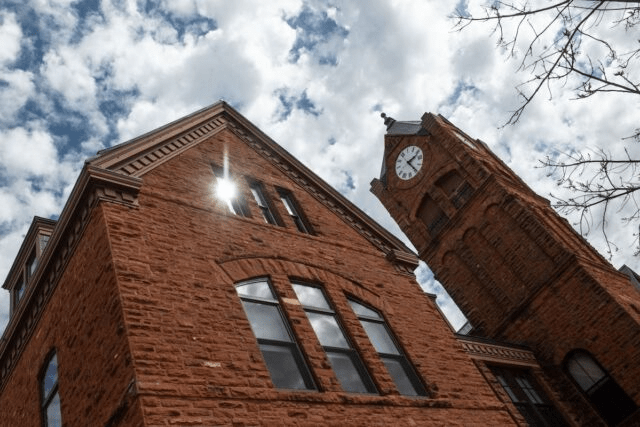
(Appeared in NonDoc on March 2, 2024 — https://nondoc.com/2024/03/02/day-of-reckoning-faces-uco-other-regional-universities/)
I recently had the opportunity to delve into an article from Non Doc discussing the debate for Oklahoma House District 39, which included a question centered around the enrollment challenges at the University of Central Oklahoma (UCO). The candidates, Erick Harris, Regan Raff, and Richard Prawdzienski, engaged in a thoughtful discourse regarding the impact of state appropriations’ budget cuts on UCO’s enrollment, a topic close to my heart due to my prior role as a vice president overseeing enrollment efforts at the institution.
What struck me most about this debate topic is the larger issue of the impending enrollment cliff facing higher education. This problem arises from declining birth rates over the past couple of decades, leading to fewer prospective students entering colleges and universities. Additionally, despite an increase in the diversity of high school graduates, many students from underrepresented backgrounds are less likely, and in many cases because of their poor schools, they are less prepared to pursue higher education. This contributes to an overall decrease in college attendance rates, particularly in regions like the Midwest, where Oklahoma is located.
The data provided by the Oklahoma State Regents for Higher Education paints a stark picture of the situation, showing significant enrollment declines at both regional four-year institutions and two-year colleges over the past decade. Notably, UCO has experienced a substantial decrease in enrollment during this period. These statistics underscore the urgent need for strategic leadership and innovative solutions to navigate the challenges posed by declining enrollments.
A key distinction arises when comparing regional and two-year institutions to their research-focused counterparts. While research institutions benefit from greater resources and prestige, enabling them to attract students from both in-state and out-of-state, regional institutions face a different reality. They primarily rely on state appropriations and tuition fees for revenue, a model that has become increasingly precarious with dwindling state funding. This reality is evident in Oklahoma with the research universities, Oklahoma State University and the University of Oklahoma. These institutions have their own unique challenges, but they are not the same.
During my tenure at UCO in the early 2000s, I witnessed firsthand the institution’s reliance on state funding, which constituted approximately 65% of its budget initially, dropping to 50% by 2008, and now hovering around 25% as of the latest report in 2023. This shift towards increased reliance on tuition fees has placed a heavier financial burden on students, particularly those from first-generation, low-income, and other underserved backgrounds. While UCO succeeded in attracting students at the start of the millennium, increased tuition and fee costs eventually led to high attrition after the first or second year for these students, especially following significant declines in state appropriations post-Great Recession. I witnessed this challenge firsthand during my time there, and I am sure that the current leadership is encountering the same issue.
Embracing Innovative Operational Strategies
To address these challenges effectively, institutions such as UCO have implemented various strategies, including tuition discounting. While historically employed by private institutions, tuition discounting entails offering scholarships based on merit or financial need to attract prospective students. However, this approach necessitates meticulous budget management to ensure sustainability and prevent an over-reliance on tuition revenue. Achieving this balance is crucial for the success of institutions employing this strategy. Public institutions are beginning to become more strategic in monitoring and administering this process, but it remains a financial and leadership challenge.
Like many institutions, UCO utilizes scholarships to recruit students based on merit or high school academic achievement. However, due to limited budgets, regional and two-year institutions may face challenges in competing with research institutions to attract top-performing students. Therefore, it’s essential to adopt a strategic approach in identifying the most promising prospective students within the constraints of the scholarship budget.
Furthermore, I advocated increasing support for students with significant financial need. These students often represent the core of Oklahoma’s population and are more likely to contribute to the state’s economic development post-graduation by remaining in the state. Therefore, investing in their education is paramount. Neglecting to do so could lead to attrition and leave them burdened with substantial debt after only two years of enrollment, a scenario that should be avoided at all costs. Our primary goal should be to ensure these students successfully graduate and contribute positively to their communities.
As this trend continues, it’s imperative for institutions like UCO and its peers to strike a balance between attracting high-achieving students through merit-based scholarships and providing adequate support to students with financial need. By doing so, we can fulfill our mission of fostering academic success and positively impacting our local communities.
Beyond tuition discounting, some institutions have successfully adapted to the changing landscape in other ways. Southeastern Oklahoma State University, for instance, has embraced online education, catering to working adults seeking to advance their careers. The data highlights that it outperformed its peers by increasing enrollment by instituting this strategy several years ago. It is not a guaranteed fix, and like all strategies, it requires financial investments which incur risk for sure.
Universities such as Georgia State University have implemented targeted support programs to assist first-generation, low-income, and academically underprepared students, demonstrating a commitment to enhancing student success and institutional resilience. By recognizing the diverse characteristics and needs of their student body, these institutions have developed tailored strategies and support systems to address specific challenges faced by these students. The innovative approach exemplified by Georgia State University underscores the substantial return on investment that strategic interventions can offer, ultimately leading to improved student retention rates and increased tuition revenue. Despite the inherent risks associated with such initiatives, the reluctance to pursue them may prove detrimental to both student outcomes and institutional viability. Therefore, embracing strategic interventions remains essential for institutions seeking to foster student success and ensure long-term sustainability in the higher education landscape. At UCO, we created the Black Male Initiative, which received national recognition for employing a similar approach as what was used at Georgia State.
Regional and two-year institutions are vital contributors to Oklahoma’s economy and social mobility. However, their ability to fulfill this role is threatened by declining enrollments and financial constraints. It is imperative for state leaders to prioritize higher education funding to ensure accessibility and affordability for all students. Additionally, institutional leaders must continue to innovate and adapt to secure the future of higher education in Oklahoma. The election win by Mr. Harris presents an opportunity for him to collaborate with UCO and state system leaders to better understand and address the declining college enrollment and graduation rates. The future of the State of Oklahoma depends on this work and collaboration.
 The word from the Pope